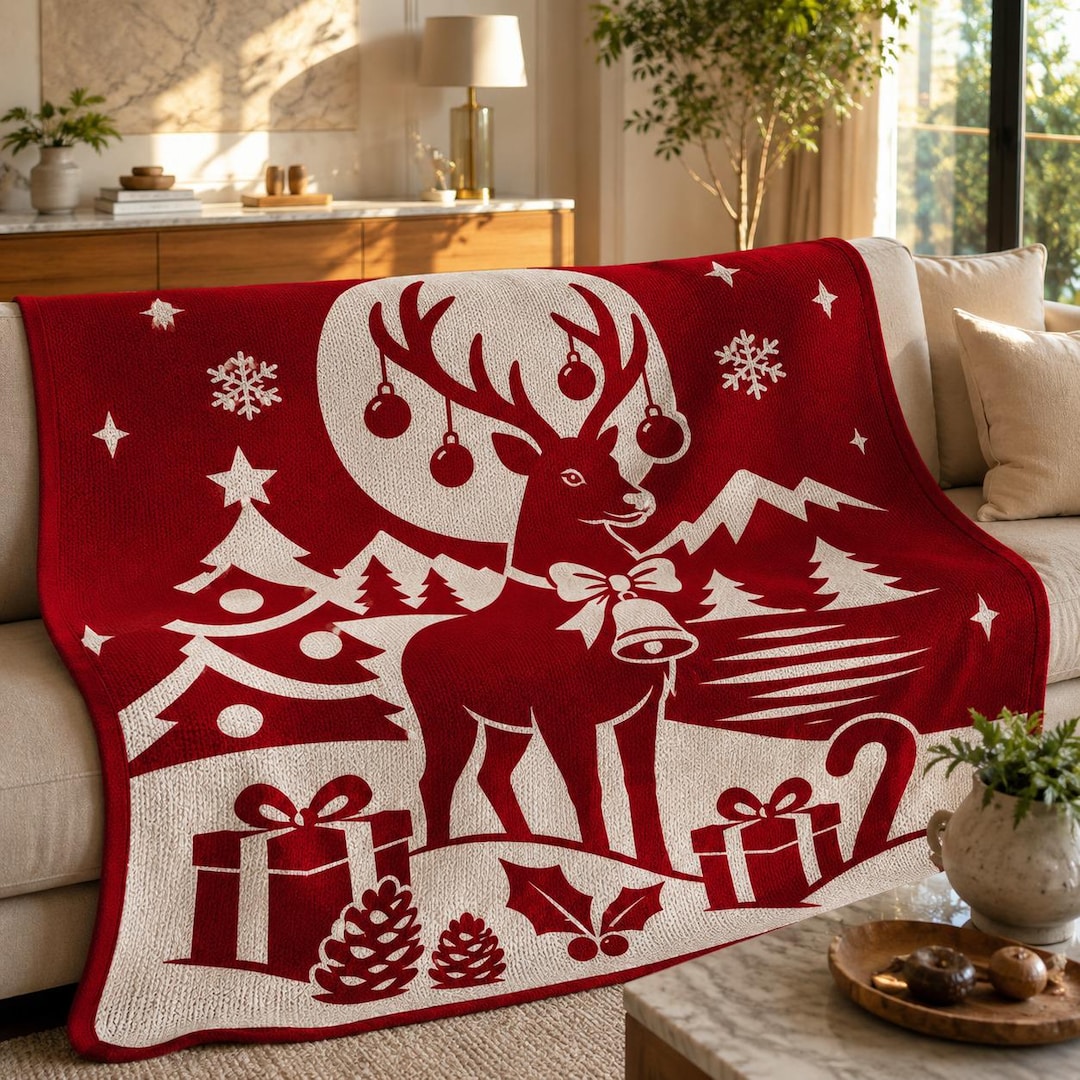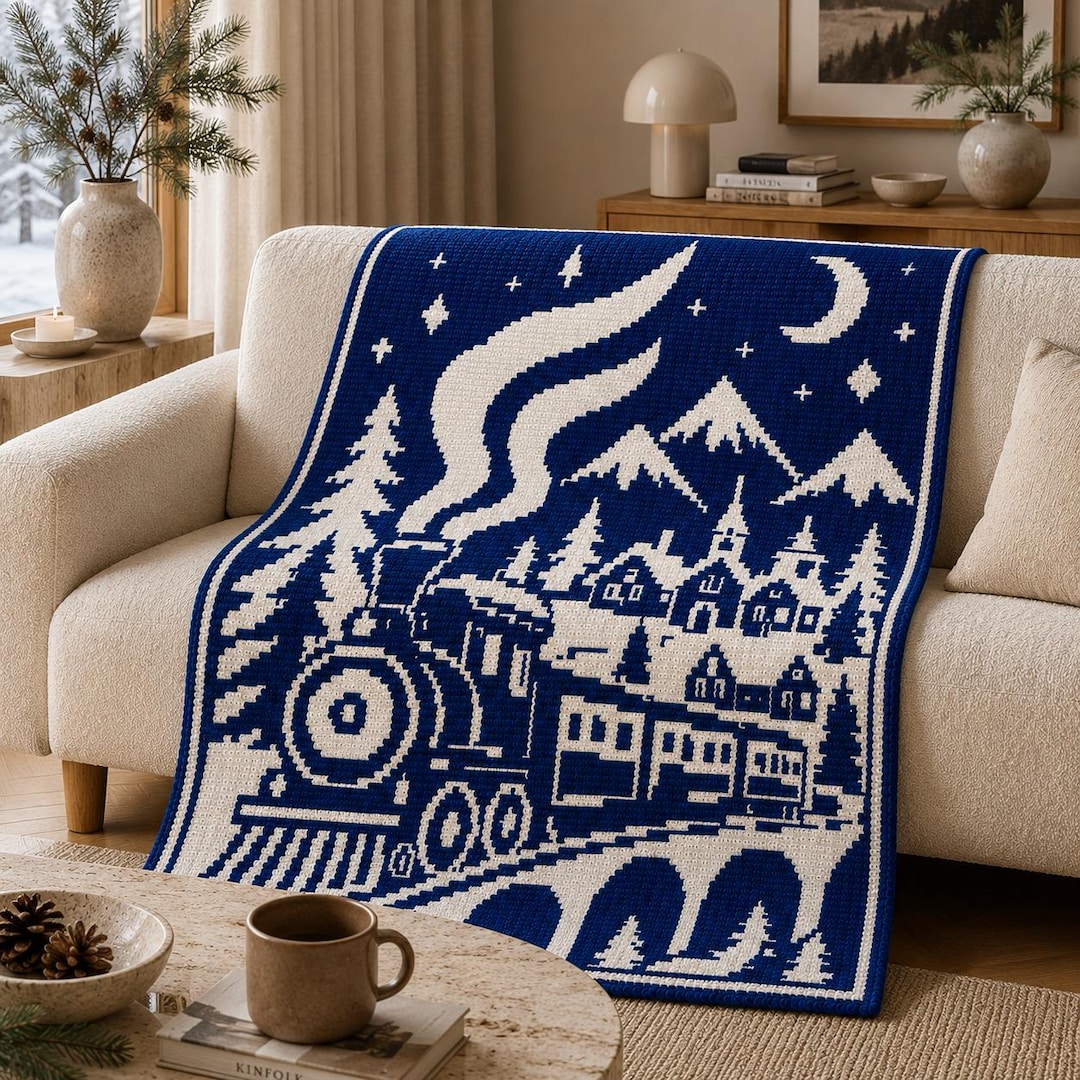
If you want to crochet a blanket with a picture on it, such as a deer, a cabin or a cat, you will quickly run into three techniques: tapestry crochet, mosaic crochet and interlocking crochet. All three create colorwork, but they feel completely different on the hook. This guide explains how each one works, what the fabric is like and which technique is best for your next blanket.
Quick Answer
Tapestry crochet changes colors within a row and carries the unused yarn inside the stitches. Mosaic crochet works one color per row and creates the picture by dropping double crochets into rows below. Interlocking crochet builds two mesh layers that weave together and is fully reversible. For large picture blankets, mosaic crochet is usually the easiest to follow because you never juggle two yarns at once.
Key Takeaways
- Tapestry: color changes mid-row, dense fabric, can show the carried color peeking through.
- Mosaic: one color per row, crisp graphic designs, beginner friendly once you can read a chart.
- Interlocking: two layers, reversible, great for geometric patterns but slower to learn.
- For detailed picture blankets, overlay mosaic crochet gives clean results with simple stitches.
Quick Comparison
| Tapestry | Mosaic | Interlocking | |
|---|---|---|---|
| Yarns in use at once | 2 or more | 1 per row | 2 (one per layer) |
| Basic stitches | Mostly single crochet | Single + double crochet | Double crochet + chains (mesh) |
| Color changes | Within the row | At the end of the row | Each row, alternating layers |
| Fabric | Dense, stiff | Thick, textured | Double layer, soft |
| Reversible? | Partly | No (overlay) | Yes |
| Best for | Bags, baskets, wall hangings | Picture blankets, throws | Geometric blankets, scarves |
What Is Tapestry Crochet?
In tapestry crochet you work with two or more colors in the same row. The color you are not using is laid on top of the previous row and crocheted over, so it travels hidden inside the stitches until you need it again. It creates a firm, almost woven fabric, which is why it is popular for bags, baskets and rugs.
- Pros: very detailed designs, many colors possible, sturdy fabric.
- Cons: yarn tangles, tension is tricky, the carried color can peek through, and big blankets can feel heavy and stiff.
What Is Mosaic Crochet?
Mosaic crochet uses only one color in each row. The design appears when you work a double crochet down into a row below, pulling the color from that row up to the surface. There are two main styles: overlay mosaic, where double crochets are worked in front of the fabric, and inset mosaic, which uses chain spaces. Our inset vs overlay mosaic crochet guide explains the difference.
In overlay mosaic crochet, most patterns work every row from the right side and cut the yarn at the end of each row, so you never have to manage two balls at once. That is why it is so popular for large picture blankets. Read our overlay mosaic crochet beginner guide for a step-by-step introduction.
- Pros: one color at a time, simple stitches, crisp pixel-like graphics, easy to follow from a chart.
- Cons: many yarn ends (often turned into fringe or a border), and the back is not as neat as the front.
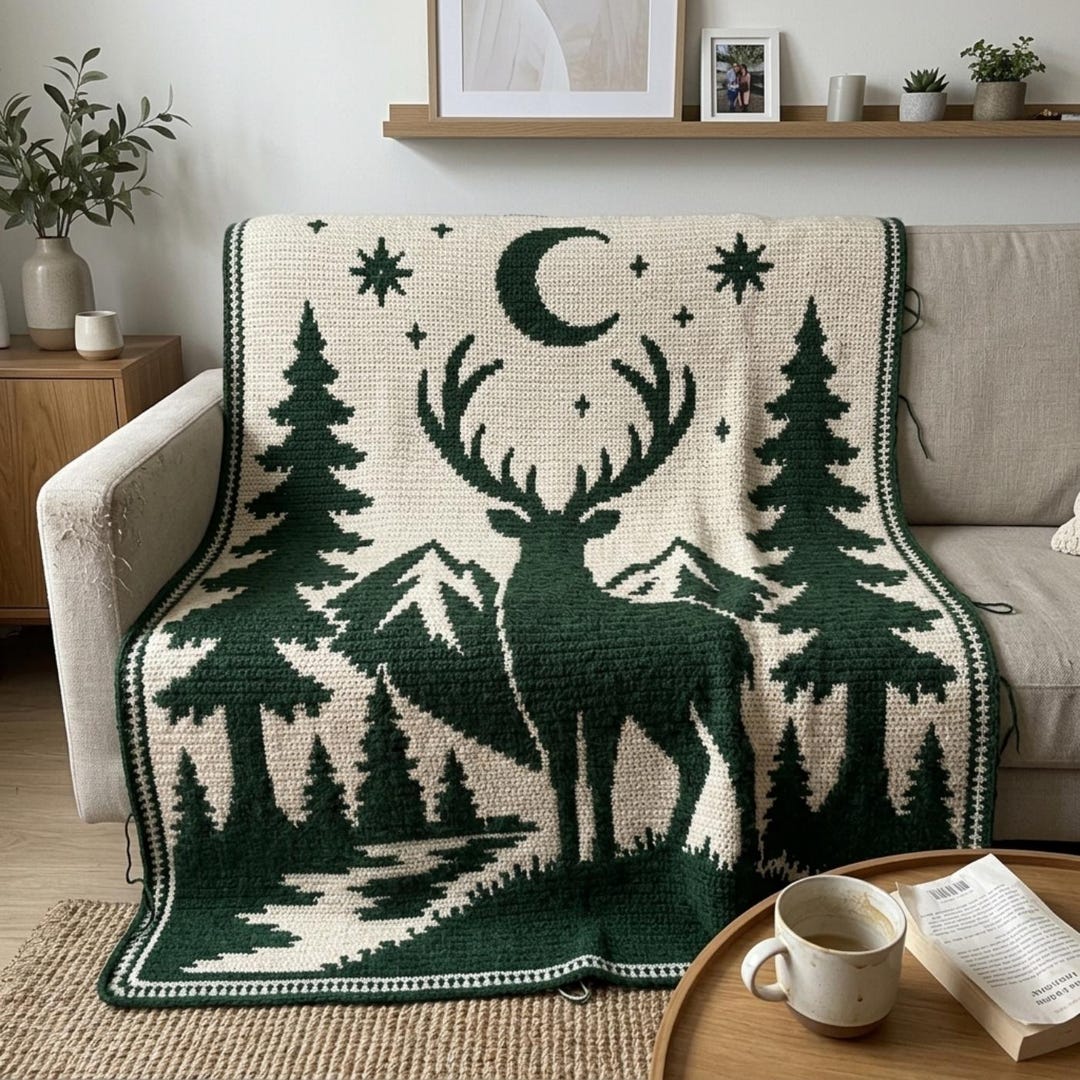
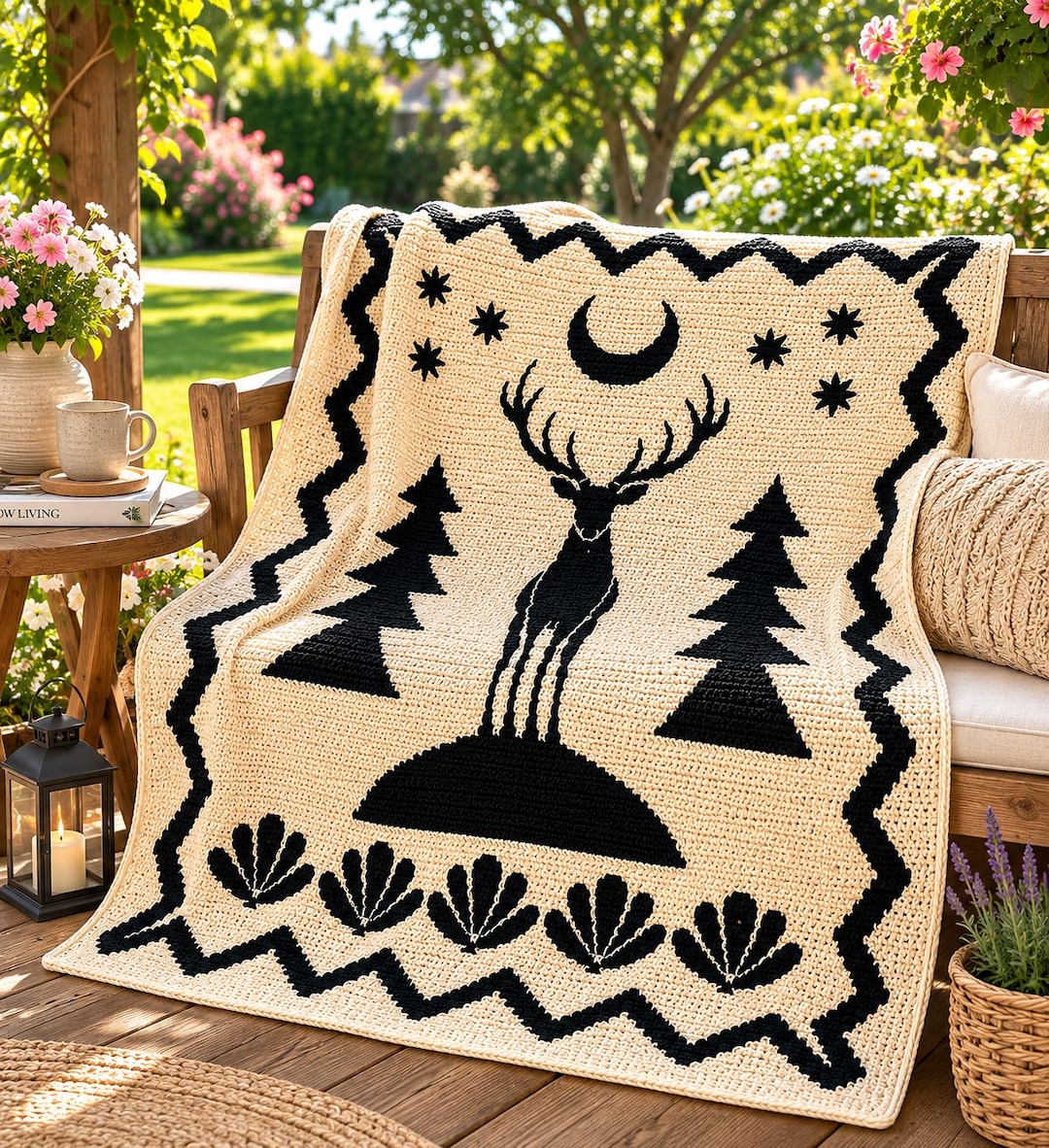
Example of overlay mosaic: the Woodland Deer mosaic crochet blanket pattern uses just two colors to create pine trees, mountains and a deer.
What Is Interlocking Crochet?
Interlocking crochet (sometimes called double filet) builds two separate mesh layers, one in each color. Each new row is worked into the mesh of the layer below, so the two layers lock together. The result is a thick, fully reversible fabric where the colors are swapped on the back.
- Pros: reversible, very warm, no carried yarns showing.
- Cons: uses more yarn, slower, and best suited to geometric patterns rather than detailed pictures.
Which Technique Should You Choose?
- You want a picture blanket (animals, landscapes, holidays): mosaic crochet.
- You want a reversible geometric blanket: interlocking crochet.
- You want a sturdy bag or basket with many colors: tapestry crochet.
- You are a beginner: start with mosaic. You only need single and double crochet, plus the ability to how to read a mosaic crochet chart.
Still deciding? Our article on mosaic crochet vs regular crochet and our guide to what is mosaic crochet cover the basics.
Mosaic Crochet Blanket Patterns to Try
If mosaic crochet sounds right for you, here are a few of our overlay mosaic blanket patterns:
- Forest Cabin pattern: listed as beginner friendly, a compact 80 × 114 stitch chart.
- Rainbow pattern: listed as beginner friendly, a simple nursery design.
- Scandinavian Deer pattern: listed for confident beginners, a Nordic folk design.
- 4-pattern winter bundle: four designs in one download.
Browse more themes: cabin and mountain crochet blanket patterns, baby blanket mosaic crochet patterns and animal mosaic crochet blanket patterns.
FAQ
Is mosaic crochet easier than tapestry crochet?
For most people, yes. Mosaic uses one color per row, so you never manage two strands at once. Tapestry requires carrying yarn and controlling tension while changing colors mid-row.
Is interlocking crochet the same as mosaic crochet?
No. Interlocking crochet builds two separate mesh layers that lock together. Mosaic crochet is a single layer where double crochets are dropped into lower rows.
Which colorwork technique is reversible?
Interlocking crochet is fully reversible. Overlay mosaic is not, because the back shows the yarn ends and the dropped stitches.
Can I make a blanket with tapestry crochet?
Yes, but the fabric is dense and heavy. Many crocheters prefer mosaic for large blankets because it drapes better and is easier to follow.
Start Your First Colorwork Blanket
Pick a two-color design and give mosaic crochet a try. Start with the Forest Cabin mosaic crochet pattern or browse our easy crochet blanket patterns for beginners.